
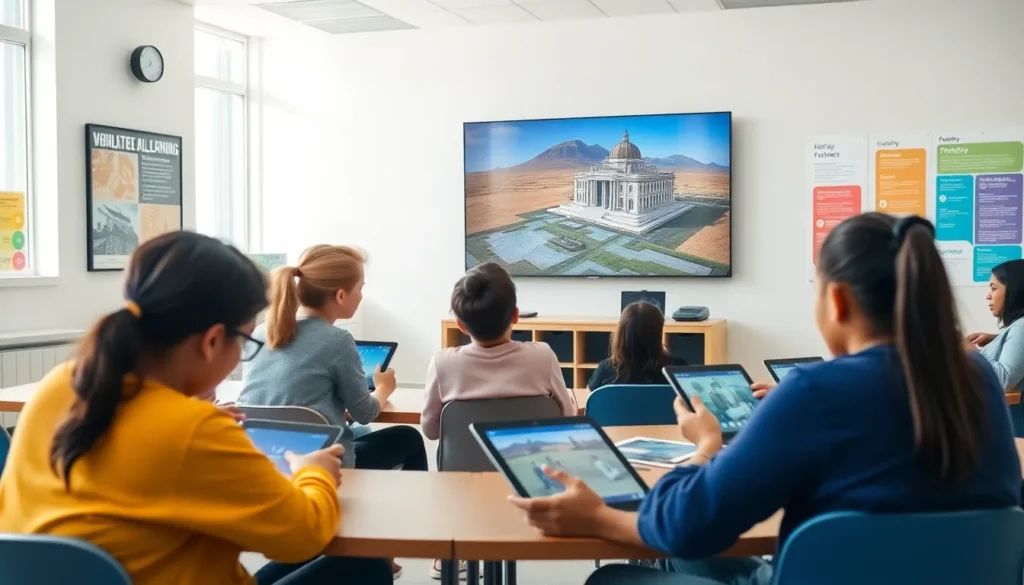
In today’s fast-paced world, where the only constant is change, education must evolve faster than a toddler learning to run. Enter emerging learning technologies, the superheroes of modern education, swooping in to save the day with a cape of innovation. Imagine personalized learning experiences tailored to each student, virtual reality making textbooks feel like ancient relics, and gamification transforming the classroom into a thrilling game arena. This isn’t just a dream: it’s happening now, reshaping how students absorb knowledge. So, let’s unravel this exciting landscape and see how these technologies are setting the stage for the future of learning.
The Rise of Artificial Intelligence in Education

Artificial Intelligence (AI) is emerging as a game-changer in the educational landscape. One of AI’s most impressive feats is creating truly personalized learning experiences. By analyzing students’ learning patterns, preferences, and progress, AI can tailor educational content to meet individual needs. This bespoke approach empowers students, helping them learn at their own pace, which is a refreshing shift from the traditional one-size-fits-all model.
Personalized Learning Experiences Powered by AI
Through adaptive learning platforms, teachers can use insightful analytics to identify where students struggle or excel. Imagine a scenario where a student grapples with algebra: AI-driven tools can offer targeted exercises, instantly adjusting to how well the student performs. This not only boosts understanding but also enhances confidence.
Automated Tutoring and Support Systems
Besides, the rise of automated tutoring systems ushers in an era where students receive help around the clock. These AI tutors offer immediate assistance, answering questions on-demand, further facilitating the learning process. With AI stepping in as a supportive ally, educators can focus on deeper learning tasks while students feel empowered to seek help anytime they need it.
Virtual Reality and Augmented Reality in Learning
Virtual Reality (VR) and Augmented Reality (AR) are redefining what it means to learn. Imagine stepping into a simulated Egyptian pyramid to explore its mysteries or observing the intricate structures of a cell as if floating inside it. VR and AR don’t just make learning fun: they immerse students in the subject matter, creating memorable experiences that enhance retention.
Immersive Learning Environments through VR and AR
The potential for immersive learning environments is vast. Schools and universities increasingly adopt VR and AR to transform traditional lessons into engaging adventures. For instance, biology classes can leverage VR to allow students to visualize complex processes like photosynthesis in a fully interactive 3D environment. This approach cultivates curiosity and deeper understanding.
Practical Applications in Various Educational Settings
Also, the practical applications of VR and AR extend beyond the confines of a single classroom. From virtual field trips that take students around the globe to augmented lessons where students manipulate 3D objects, the sky really is the limit. Institutions are exploring ways to incorporate these technologies in subjects ranging from history to physics, making learning not only informative but also deeply enjoyable.
Gamification and Game-Based Learning
When students hear the word “school,” they don’t typically think of fun and games. But, gamification and game-based learning are shaking up that notion and injecting excitement into education. By integrating game mechanics into learning activities, teachers can create a dynamic atmosphere that encourages involvement and enthusiasm.
Engaging Students through Game Mechanics
By leveraging competition, rewards, and challenges, educators can engage students more effectively. For example, using leaderboards can spark a healthy competition among students, nudging them to improve their performance while making learning exhilarating. These methods can transform tedious study sessions into captivating experiences.
Best Practices for Implementing Game-Based Learning
But how does one carry out game-based learning successfully? The key is to align game mechanics with educational outcomes. Educators should ensure that the learning objectives are clear and that the gaming elements genuinely enhance understanding rather than distract from it. Tools like quiz games or interactive simulations can serve as excellent gateways to thoughtful engagement while reinforcing crucial concepts.
Collaborative Learning Technologies
Collaboration in learning is nothing new: but, emerging technologies are enhancing how students interact and work together. With collaborative learning technologies, peer interaction can flourish in ways that were previously unimaginable.
Enhancing Peer Interaction through Digital Platforms
Digital platforms like discussion forums and collaborative apps allow students to connect, brainstorm, and solve problems together, even if they’re miles apart. These environments foster a sense of community and belonging, crucial components of effective learning. Students no longer feel isolated: they are part of a vibrant learning ecosystem.
Tools for Asynchronous Collaboration
Beyond real-time collaboration, asynchronous tools are revolutionizing how students connect. Platforms that allow students to contribute at their convenience mean that learning can happen anytime, anywhere. Whether it’s a group project being compiled online or collaborative research, these tools empower students to engage fully during their learning journeys.
The Future of Learning Management Systems
As emerging technologies continue to influence education, learning management systems (LMS) are evolving alongside them. LMS platforms are no longer just places to house course materials: they are becoming dynamic hubs equipped with cutting-edge features to enhance learning.
Integration of Emerging Technologies in LMS
With tools like AI, VR, and gamification becoming more prevalent, integrating these technologies into LMS platforms is essential. Adaptive learning algorithms can tailor coursework to individual users, while VR modules can make course materials immersive and engaging. This evolution means that LMS are transforming into personalized learning environments that cater to the diverse needs of students.
Trends in LMS Development
Looking ahead, several trends are emerging in LMS development. Increased focus on mobile learning will enable learners to access materials at their convenience, anytime, anywhere. Besides, incorporating analytics tools will empower educators to track student progress more effectively and adjust their teaching strategies accordingly. This blend of flexibility and data-driven instruction will undoubtedly shape the future of education.