
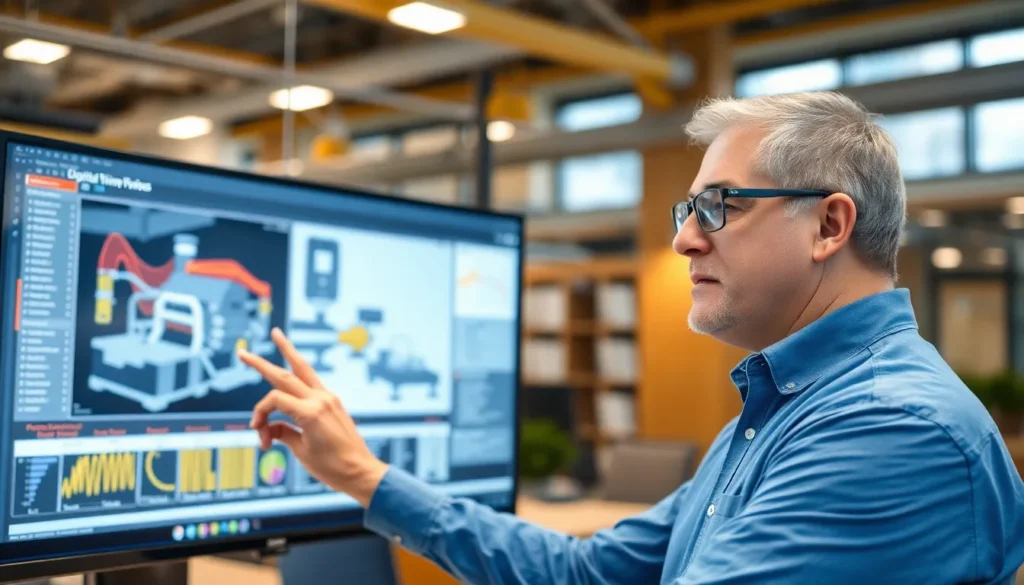
In a world where reality often feels like a sci-fi movie, digital twins are the dazzling stars of the show. Imagine having a virtual clone of a physical object, system, or even an entire city—ready to predict, analyze, and optimize like a superhero in a cape. These digital doppelgängers are not just tech jargon; they’re transforming industries and making life a whole lot easier, one byte at a time.
From manufacturing to healthcare, the use cases for digital twins are as varied as a buffet of delicious options. They’re helping companies save money, improve efficiency, and even avoid disasters—kind of like having a crystal ball, but way cooler and more data-driven. Buckle up as we dive into the fascinating world of digital twins and explore how they’re reshaping the landscape of innovation.
Table of Contents
ToggleOverview of Digital Twins
Digital twins represent a significant advancement in technology, functioning as virtual replicas of physical objects, systems, or environments. These innovative models enable detailed analysis and optimization, transforming operations across various sectors.
Definition of Digital Twins
Digital twins are real-time digital replicas that mimic physical counterparts, including machines, buildings, and processes. Data flows from sensors to digital twins, allowing for precise monitoring and prediction of behavior. Throughout industries, digital twins facilitate experimentation and testing without interfering with actual operations. These models support decision-making by providing insights based on real-world conditions.
Importance in Modern Technology
Modern technology relies heavily on digital twins for enhanced efficiency and innovation. They enable businesses to optimize processes by simulating scenarios without the risks associated with real-world execution. Manufacturing benefits from reduced downtime and increased productivity through predictive maintenance strategies enabled by digital twins. In healthcare, these models support personalized medicine by analyzing patient data, forecasting health outcomes, and guiding treatment plans. Industries leverage digital twins to drive improvements and elevate service quality, demonstrating their essential role in today’s technology landscape.
Industry Applications
Digital twins find diverse applications across various industries, demonstrating their versatility and power in optimizing operations. Both manufacturing and healthcare leverage this technology to achieve significant outcomes.
Manufacturing and Production
In manufacturing, digital twins simulate production lines and equipment performance. They allow real-time monitoring, thus increasing operational efficiency and minimizing downtime. An example includes aerospace companies using digital twins for aircraft components testing. By employing these virtual replicas, manufacturers can predict failures before affecting production, leading to cost savings and enhanced product quality. Furthermore, data from digital twins enables continuous improvement through ongoing process adjustments and forecasting.
Healthcare and Medicine
Healthcare utilizes digital twins to personalize treatment plans for patients. Virtual replicas of patients’ organs or systems enhance diagnosis accuracy and treatment efficiency. For instance, digital twins assist in managing chronic conditions by predicting patient outcomes based on real-time health data. Hospitals benefit from this technology by optimizing resource allocation and improving surgical planning. Additionally, researchers use digital twins to simulate drug interactions, accelerating the development of new therapies. This approach fosters innovation and enhances patient care through targeted, data-driven solutions.
Smart Cities and Infrastructure
Digital twins play a vital role in enhancing smart cities and infrastructure by simulating real-time data to improve decision-making and efficiency.
Urban Planning and Development
Urban planners leverage digital twins to create detailed simulations of city environments. These models support data-driven decisions about resource allocation, land use, and zoning regulations. By analyzing factors like population density and traffic patterns, planners can visualize potential changes and their impacts. For instance, cities can assess how building new parks affects community well-being. Moreover, stakeholders gain insights that foster sustainable growth, ensuring developments align with both current needs and future demands.
Transportation and Logistics
Digital twins enhance transportation systems through real-time monitoring and predictive analytics. Cities use these virtual models to optimize traffic flow and minimize congestion. By simulating various scenarios, urban planners can implement effective solutions like smart traffic lights and alternative routing. This approach leads to improved air quality and reduced travel times. Additionally, logistics companies utilize digital twins to manage fleet operations more efficiently. By predicting maintenance needs and optimizing delivery routes, businesses can cut costs and improve service reliability, enhancing the overall transportation experience.
Energy and Utility Management
Digital twins play a pivotal role in energy and utility management, enhancing operational efficiency and decision-making capabilities within these sectors.
Renewable Energy Integration
Digital twins enable seamless integration of renewable energy sources. By creating accurate virtual models of power grids, they forecast energy generation from sources like solar and wind. These models allow operators to balance supply and demand, optimizing the use of renewables. Moreover, they simulate various scenarios, helping stakeholders assess the impact of different energy mixes on grid stability. As a result, utilities can improve sustainability while maintaining reliable service.
Predictive Maintenance in Utilities
Predictive maintenance implementations benefit greatly from digital twins. By analyzing data from assets in real time, these digital replicas predict failures before they occur. Utility companies leverage this insight to schedule maintenance activities, reducing unplanned outages and repair costs. Information from digital twins enhances the understanding of asset conditions, leading to more effective resource allocation. Consequently, utilities can extend the lifespan of equipment while ensuring service reliability and customer satisfaction.
Future Trends and Innovations
Digital twins continue to evolve, leading to significant advancements and innovative applications across numerous fields. These trends shape industries and enhance operational capabilities, fostering smarter solutions.
Advancements in Technology
AI integration enhances digital twins, enabling real-time data analysis and predictive modeling. Machine learning algorithms improve accuracy in simulations, which supports strategic decision-making. IoT devices contribute by supplying vast amounts of sensor data, bridging physical and digital environments. Blockchain technology offers secure data sharing, ensuring the integrity of information between stakeholders. As these technologies advance, they enhance collaboration, enabling seamless interactions among systems and users.
Potential New Use Cases
Supply chain management presents a ripe area for digital twin application, allowing companies to monitor entire logistics networks. By simulating the supply chain, organizations can predict bottlenecks and optimize inventory levels. Smart agriculture employs digital twins to create models of farm systems, facilitating data-driven decisions on crop yields and resource allocation. Urban mobility solutions can also benefit from digital twins, providing insights into transportation patterns and infrastructure needs. Health informatics stands to gain further through personalized medicine, using real-time data to tailor treatment plans for individual patients.
Digital twins represent a significant leap forward in technology across various sectors. Their ability to create real-time virtual replicas allows businesses to optimize processes and enhance decision-making. As industries continue to adopt these innovative solutions the potential for improved efficiency and cost savings grows.
With advancements in AI and IoT integration digital twins will likely evolve further unlocking new possibilities in areas like supply chain management and smart agriculture. The future of digital twins is bright and their impact on innovation and quality of life will only expand as they become more widely implemented.


