
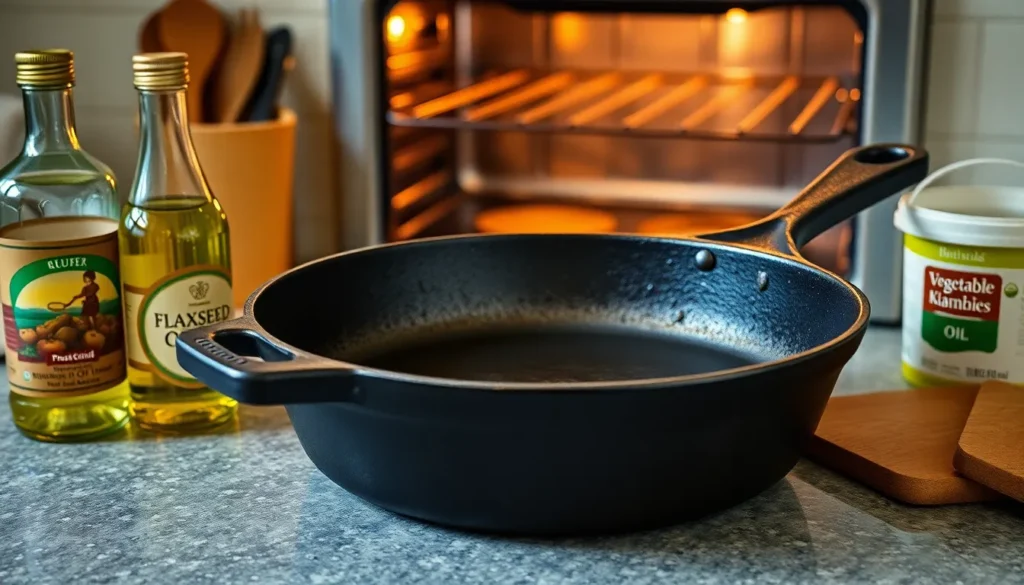
Seasoning cast iron in the oven isn’t just a kitchen chore; it’s a rite of passage for any cooking enthusiast. Imagine transforming a rusty relic into a gleaming culinary powerhouse that can sear, sauté, and bake like a pro. With a little bit of oil and some oven magic, that old skillet can become your new best friend.
But let’s face it, seasoning can sound as daunting as deciphering hieroglyphics. Fear not! This guide will break it down into simple steps, making it easier than deciding between pizza or tacos for dinner. Get ready to unleash the true potential of your cast iron cookware and impress friends and family with your newfound skills. After all, who wouldn’t want to wield a pan that can practically last a lifetime?
Table of Contents
ToggleUnderstanding Cast Iron Seasoning
Seasoning cast iron involves applying a layer of fat to create a non-stick surface. This process protects the cookware from rust and improves cooking performance.
What Is Seasoning?
Seasoning refers to the process of bonding oil to cast iron through heating. Layers of polymerized fat create a hard, protective surface. This surface enhances durability and prevents food from sticking. Different oils offer varying smoke points and results, influencing the seasoning quality. Common choices for seasoning include vegetable oil, flaxseed oil, and canola oil. Each oil type contributes unique characteristics to the final non-stick surface.
Benefits of Seasoning Cast Iron
Seasoning cast iron provides multiple advantages. Non-stick properties improve with each seasoning layer, making cooking and cleanup easier. Enhanced flavor results from the oils used in the seasoning process, often imparting richness to dishes. Properly seasoned cookware can withstand high heat, making it suitable for various cooking techniques like frying and baking. This protective layer also resists rust and corrosion, extending the lifespan of the cookware. Overall, seasoning transforms cast iron into a versatile kitchen essential.
Preparing Your Cast Iron Cookware
Effective preparation sets the foundation for successful seasoning. Ensuring your cast iron is clean and choosing the right oil plays crucial roles in this process.
Cleaning Your Cast Iron
Cleaning cast iron requires a few simple steps. Rinse the cookware under warm water to remove food debris. Use a stiff brush or sponge to scrub away any stubborn residue. Avoid using soap, as it can strip away the seasoning. Dry the skillet thoroughly with a towel or by heating it on the stove to eliminate moisture. Proper cleaning is essential for creating a strong bond during seasoning.
Choosing the Right Oil
Selecting the appropriate oil significantly affects the seasoning quality. Options like vegetable oil, flaxseed oil, or canola oil provide varying smoke points and flavor profiles. Flaxseed oil boasts one of the highest smoke points and promotes a durable seasoning layer. Canola oil remains a popular choice due to its availability and neutral flavor. Prioritizing oils with high smoke points enhances the effectiveness of the seasoning process.
Seasoning Cast Iron In Oven
Seasoning cast iron in the oven helps create a resilient, non-stick surface. This method ensures even heat distribution and controlled conditions, making it effective.
Step-by-Step Process
- Clean thoroughly using warm water and a stiff brush to eliminate any residue.
- Dry the cast iron completely to prevent rust.
- Apply a thin layer of oil across the entire surface, inside and out.
- Place the skillet upside down in the oven to avoid pooling oil.
- Use aluminum foil on the bottom rack to catch drips.
- Preheat the oven to the desired temperature and keep it there for the recommended time.
This structured approach maximizes the effectiveness of the seasoning process.
Temperature and Time Considerations
Optimal temperatures range from 400°F to 500°F for proper seasoning. Choosing a higher temperature allows oil to polymerize effectively.
A seasoning duration of one to two hours is ideal for forming a solid layer. Adjustments may be necessary based on the oil type used. Flaxseed oil benefits from higher temperatures, while canola oil performs well at moderate levels.
Control of both heat and time is crucial for successful seasoning.
Maintaining Your Seasoned Cast Iron
Maintaining seasoned cast iron cookware ensures longevity and optimal performance. Regular upkeep promotes a resilient non-stick surface and enhances cooking results.
Regular Maintenance Tips
Monitor the seasoning regularly to maintain optimal performance. Clean the skillet gently with warm water and a stiff brush after each use. Avoid using soap or abrasive scrubbing pads, as these can strip the seasoning. After cleaning, dry it thoroughly to prevent moisture buildup. Apply a light coat of oil, using a paper towel to spread an even layer across the surface. Heating the skillet briefly on the stovetop can help the oil bond with the cast iron. Store the cookware in a dry place and consider placing a paper towel inside to absorb excess moisture.
Dealing with Rust or Flaking
Rust can occur if cast iron is not cared for properly. First, remove any rust by scrubbing affected areas with fine steel wool or a rust eraser. Rinse the skillet with warm water afterward to remove debris. Dry it completely to prevent further rust formation. Once dry, reapply a thin layer of oil and re-season by baking it upside down in the oven. Flaking indicates a weak seasoning layer. Address this by removing the flaking pieces, cleaning the skillet, and reseeding it thoroughly to ensure a robust protective layer forms. Regular inspection and upkeep prevent rust and flaking from becoming issues.
Mastering the art of seasoning cast iron in the oven can significantly elevate one’s cooking experience. By following the outlined steps and maintaining proper care, anyone can transform their cast iron cookware into a reliable kitchen ally. This process not only enhances the durability and performance of the skillet but also enriches the flavors of every dish prepared.
With a well-seasoned pan, the possibilities in the kitchen are endless. Embracing this technique ensures that cast iron cookware remains a cherished tool for years to come, allowing culinary enthusiasts to impress with their skills and creativity.


